
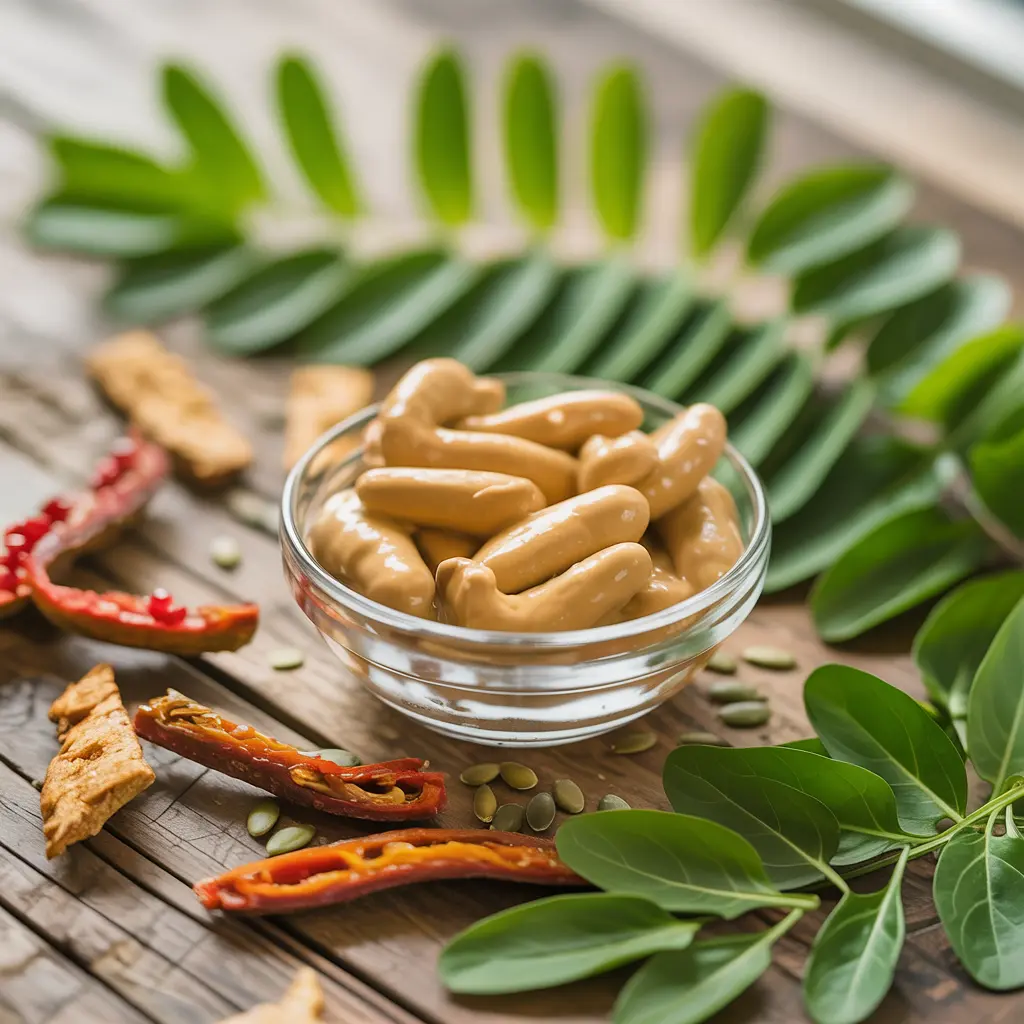
Probiotic-Rich Foods for Naturally Glowing Skin
Backed by Science, Made for Real Life
Healthy, glowing skin isn’t just a result of what you apply on the outside — it starts much deeper. In recent years, science has uncovered a fascinating connection between gut health and skin health, known as the gut-skin axis. At the heart of this relationship are probiotics, or beneficial bacteria, that support not just your digestion, but also your skin’s clarity, tone, and resilience.
Here’s the good news: you don’t need to invest in expensive supplements to support your gut microbiome. Many everyday, natural foods are rich in probiotics — and they may quietly be working behind the scenes to help your skin glow from within.
In this article, we’ll explore five of the best probiotic-rich foods backed by science, explain how they contribute to healthier skin, and offer practical ways to include them in your diet.
The Gut-Skin Connection: A Quick Explanation
Your gut is home to trillions of bacteria, both good and bad. When the balance tips in favor of the good bacteria (probiotics), your gut lining stays strong, inflammation is reduced, and your body functions more smoothly — including how your skin regenerates and protects itself.
However, when your gut is out of balance, toxins can leak into your bloodstream and trigger inflammation, which often shows up on your skin as acne, dullness, or eczema. By feeding your gut the right kinds of food, you’re supporting a system that’s directly linked to your skin’s clarity and glow.
The Top 5 Probiotic Powerhouses for Your Skin
1. Yogurt (with Live & Active Cultures)
Why it matters:
Yogurt is one of the most accessible sources of live probiotics, particularly Lactobacillus and Bifidobacterium strains. These beneficial bacteria help maintain a balanced gut microbiome, which in turn can reduce inflammation — a key factor in acne, redness, and skin sensitivity.
The skin connection:
A 2015 clinical study in the Journal of Dermatological Science found that probiotics may reduce oxidative stress in the body, which plays a role in skin aging and dullness. Balanced gut flora also supports better nutrient absorption, including vitamins like B12 and zinc — both crucial for skin health.
How to use it:
Choose plain, unsweetened yogurt with “live and active cultures” listed on the label. Enjoy it with fresh fruit, oats, or as a base for smoothies.
2. Sauerkraut (Fermented Cabbage)
Why it matters:
Sauerkraut is a traditional fermented food rich in naturally occurring Lactobacillus bacteria, fiber, and antioxidants. It not only aids digestion but also supports your body’s detox pathways — essential for clearer skin.
The skin connection:
Fermented foods like sauerkraut may help regulate systemic inflammation and improve the skin barrier function, according to a 2021 review in Nutrients. A healthier gut lining can mean fewer flare-ups and improved skin hydration.
How to use it:
Start with 1–2 tablespoons daily. Add it to grain bowls, sandwiches, or salads — but avoid pasteurized versions, as high heat can destroy live cultures.
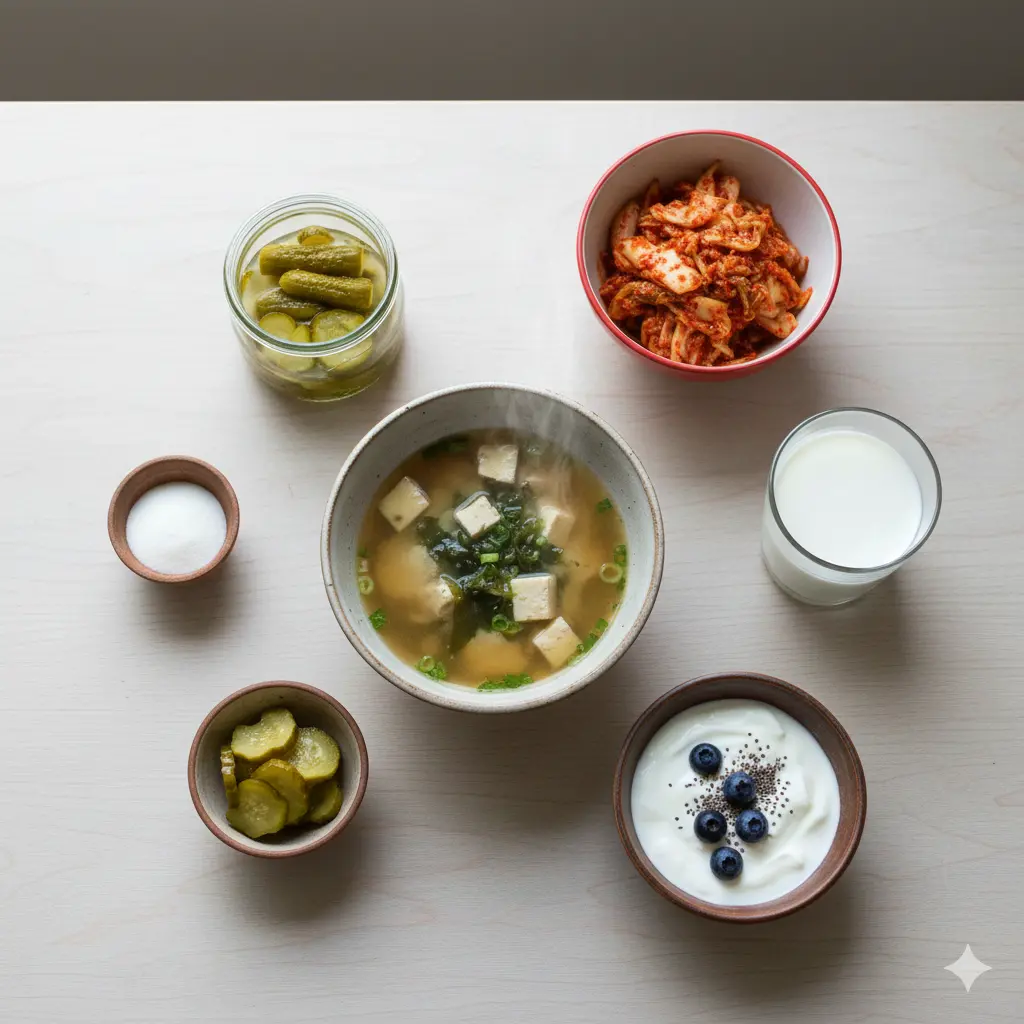
3. Kefir (Fermented Milk or Plant-Based Alternatives)
Why it matters:
Kefir contains over 30 strains of beneficial bacteria and yeasts — significantly more than yogurt — making it one of the most probiotic-dense foods available. It’s also a good source of protein, calcium, and B vitamins.
The skin connection:
The diverse microbial profile in kefir supports gut resilience and immune regulation. Some studies suggest kefir may play a role in improving skin conditions like eczema and dryness by reducing inflammatory cytokines in the bloodstream.
How to use it:
Drink kefir plain, or mix it with a dash of cinnamon or berries. If you’re dairy-sensitive, coconut or oat-based kefir varieties are excellent alternatives.
4. Fermented Pickles (Naturally Brined)
Why it matters:
Not all pickles are created equal. Fermented pickles — those preserved in saltwater brine, not vinegar — develop natural probiotics through lacto-fermentation.
The skin connection:
Probiotics from fermented vegetables may help manage skin dysbiosis — an imbalance in the skin’s microbial community. A well-balanced gut microbiota can positively affect skin texture and reduce breakouts.
How to use it:
Look for pickles labeled “raw,” “unpasteurized,” or “fermented.” Enjoy them as a crunchy snack or a tangy side dish.
5. Miso (Fermented Soy Paste)
Why it matters:
A staple in Japanese cuisine, miso is made by fermenting soybeans with Aspergillus oryzae. It’s rich in beneficial bacteria, enzymes, and isoflavones.
The skin connection:
Isoflavones found in fermented soy may protect against photoaging and improve skin elasticity, particularly in women over 40, as shown in a 2019 study in Dermato-Endocrinology.
How to use it:
Stir a spoonful into warm (not boiling) water to preserve its live cultures. You can also whisk miso into dressings or marinades.
Why Probiotics Matter for Skin Health
Probiotics help:
- Regulate inflammation
- Support immune function and skin healing
- Improve the gut-skin axis
- Enhance nutrient absorption (vitamins A, D, zinc, omega-3s)
According to Harvard Health Publishing, maintaining a diverse gut microbiome can have far-reaching effects beyond digestion — including systemic inflammation and immune balance.
Final Thoughts
Achieving radiant skin isn’t just about creams or serums — it starts from the inside. By incorporating these probiotic-rich foods into your daily diet, you’re giving your gut — and your skin — the nourishment they need to thrive.
Small, consistent changes often lead to the most noticeable results. Whether you’re sipping kefir, adding sauerkraut, or stirring miso into your soup, your microbiome (and your skin) will thank you.
References
- Journal of Dermatological Science (2015)
- Nutrients (2021)
- Dermato-Endocrinology (2019)
- Harvard Health Publishing – Gut health and overall wellness